Translate

Monday, February 26, 2007

Katrina: Eighteen months later


How is is possible that this administration has avoided impeachment when the last yokel in office was censured for nothing close to Bush/Cheney's crimes?

A good book, if you haven't already picked it up:

The Genius of Impeachment --and why it must be appied to George Bush by John Nichols

rz

America's severe poverty highest in three decades

Social kill-off is the REALITY of this age, folks.

Discuss?

rz

Hutchinson sorts Farrakhan's legacy


EOH doesn't mention the truly more controversial elements of the enigmatic Minister Farrakhan, such as the split from Elijah's son Wallace, and of course his role in fueling anti-Malcolm sentiment among those who would kill him. A good commentary nonetheless.

rz

Tuesday, February 06, 2007

In defense of Jill Clark: Human Rights Defender pt. 2


For the purposes of this series the Federal Mediation Memorandum of Agreement will be referred to as “the agreement” and the Minneapolis Police Department will be referred to as the “MPD.”--BlackLogic

“...We condemn cultures of brutality and violence everywhere they exist. Where we find them in society we will combat them. Where we find them in the police department, we will combat them. We also condemn institutional racism everywhere it exists. Where it is found in society, we will combat it. Where it is found in the police department, we will combat it...”

The epigraph above is taken from the preamble of the Memorandum of Agreement between police, the City of Minneapolis, and an unfortunately incomplete, inclusively speaking, of community members from the Twin Cities. Is that pledge being fulfilled, or does the MPD continue to foster a culture, subversive or overt, of corruption and brutality? Would it have needed federal mediation if they had lived up to this pledge?
Attorney Jill Clark was one of the most important advocates in bringing federal mediation to Minneapolis. When a lawyer has success defending underrepresented persons who have experienced brutality and/or abuse at the hands of the police department, that lawyer becomes a valuable part of that community, and a pariah to some powerful public servants who work in our local criminal justice system.
According to her supporters (myself included), Jill Clark has earned the right to be called a defender of human rights. Here is a glance at a few of the Minneapolis/St. Paul cases in which Clark successfully held police and the courts accountable for some of their collective disregard for human rights:
* Dontay St. James, an African American man, was shot 4 times by a Minneapolis police officer through his apartment door. Then he was charged with assault on a police officer. The only witness was the shooter. Jill Clark represented St. James for free, and tried the case to a jury. A jury quickly found St. James not guilty.
* Philander Jenkins, an African American man, complained that 2 jailers had tried to sexually assault him in the Hennepin County Jail. Who got criminally charged? Jenkins. Jill Clark and Jill Waite took the case pro bono and tried it to a jury. The jury acquitted Jenkins of charges that he had made a false complaint.
* Darryl Robinson, an African American man, was pushed down by a Minneapolis police officer, kicked in the head until his eardrum broke, and the cop poured a bottle of sparkling water into Robinson’s bleeding ear. Robinson got himself to a hospital and demanded that police take his criminal complaint against the officer, but MPD did nothing. Eventually, Jill Clark helped Robinson bring his claim against police to federal court. A jury gave Robinson the maximum possible award for his injuries.
* Rickey Jones, an African American man, is a photographer who caught Minneapolis police on film while they were beating an older woman. He was arrested for taking pictures and initially convicted because he complained about his rights being violated. Jill Clark took the case for free to uphold Rickey’s First Amendment rights. A motion for new trial was granted and eventually the case was dismissed.
* Patrick Fearing was beaten by St. Paul police in full view of his young daughters. An audiotape recorded a chilling record of Fearing’s screams while he was being beaten. Jill Clark and Jill Waite tried the case to a jury in federal court, which agreed that two officers had used excessive force on Fearing.
* Kenneth Bady is an African American man who friends feared was having a heart attack. They called 911 for emergency medical care. The result? Witnesses say Minneapolis Police showed up and tasered Bady, the man suspected of having a heart attack. Bady began to pursue a civil action, when suddenly he was criminally charged for the same incident—police claiming he did something wrong. Jill Clark took the criminal case free of charge and convinced the prosecutor to dismiss it.
* Lloyd Mayberry lives in St. Paul. A neighbor called St. Paul Police, who showed up, and his wife said nothing was wrong. Witnesses say that Mayberry was assaulted by police, but police criminally charged him. Jill Clark took the case for free and convinced the St. Paul prosecutor to dismiss the criminal charges.

* Alfred Flowers is an African American man who was walking near the Urban League talking on his cell phone when a Minneapolis Park Police officer approached him and took him to the ground. Witnesses say that police who showed up choked Flowers until he was unable to breathe. Police charged Flowers, but following a month-long trial in which Jill Clark defended Flowers, a jury found him not guilty.

In addition to aiding in the defense of these clients, Jill Clark continues to defend the human rights of people who have experienced police brutality, misconduct and abuse of authority while being a positive force for change in community efforts to change the underlying policies and practices that allow bad policing to exist, while stifling efforts to sustain real community policing.

Thus, it is both disheartening and curious that Clark's complaints against Hennepin County District Court Chief Justice Lucy Wieland went ignored for months by both the *Minnesota Board on Judical Standards and the Lawyer's Professional Responsibility Board, particularly since the Clark indicated she had evidence of judicial misconduct on the part of said justice (read “In Defense of Jill Clark: Human Rights Defender” -- archives).


So, why did the police department of our (un)fair yet major city require a federal mediator to intervene in their relationship with the community they are sworn to serve and protect? Because in the summer of 2002, according to an analysis of the MOA by CUAPB, “a series of high profile police incidents was capped by the wounding of 11-year old Julius Powell by a stray police bullet during a botched drug raid. Although the youth was not seriously injured, the incident brought North Minneapolis residents to the boiling point and touched off an uprising in the Jordan neighborhood in which some journalists were beaten and media vehicles were torched.

“Prior to the Powell shooting, members of the Minneapolis Police Federation attacked city council member Natalie Johnson-Lee (out of office since '05) for remarks she made in connection with a shooting incident that resulted in the deaths of community members Martha McDonald and police officer Melissa Schmidt. Johnson Lee was the only African American on the city council at that time and these attacks on her were seen very negatively by large numbers of her constituents and the Black community as a whole. A rally was held to denounce the attacks, followed by a large community meeting in North Minneapolis to discuss police/community issues. At the rally and later at the meeting, it was announced that an ad hoc coalition had come together, met with U.S. Attorney Tom Heffelfinger and contacted U.S. Department of Justice, Community Relations Section mediator Patricia Campbell Glenn to ask for federal mediation [since the city had failed to ease police/community relations-brackets mine]. Two days later, the Powell shooting occurred and the coalition requested that Ms. Glenn come to Minneapolis to assess the situation first-hand.

“The coalition met with Ms. Glenn and this meeting led to a four-month long effort to bring federal mediation to Minneapolis. There was a great deal of resistance on the part of city leadership. Mayor Rybak repeatedly called for private mediation. The task of bringing federal mediation to the city involved extensive neighborhood canvassing and numerous community meetings to 1) educate the community on mediation and why it was needed. 2) to motivate the community to call their council members and the mayor to ask for mediation, and 3) gather input on the community's desired demands for mediation. The final result of these efforts was a ten-page document outlining community demands for improved police policies, practices and accountability.

“The community's demands for mediation never saw the light of day. Police Chief Robert Olson stonewalled mediation, refusing to attend sessions with the team elected by the community. He was backed by city council members who strove to control the outcome of mediation by controlling community representation. Sadly, city leadership finally got their way, and in May 2003, a hand picked “community” team sat down with representatives from the city, the MPD, and the federation to broker a federal mediation agreement. Ms. Campbell served as the mediator.” (The rest of this analysis is linked further below.)


On December 4, 2003, the Minneapolis Police Department, at the behest of a federal mediator, entered into a memorandum of agreement (MOA) with citizens of Minneapolis designated the Unity Community Mediation Team (UCMT), a partial representation of the city.

The agreement, according to the MOA preamble, was/is “dedicated to protecting safety and the human rights, civil rights, and legal rights of all Minneapolis residents, regardless of race, ethnicity, national origin, religion, language, immigration status, gender sexual orientation, mental health, economic status or disability status

“We condemn cultures of brutality and violence everywhere they exist. Where we find them in society we will combat them. Where we find them in the police department, we will combat them. We also condemn institutional racism everywhere it exists. Where it is found in society, we will combat it. Where it is found in the police department, we will combat it.”

Also pledged by the MPD and UCMT in the preamble of the Agreement: “We agree to work together too protect the life, dignity, health, and safety of all Minneapolis residents; to continue this dialog to improve police practices; to ensure that violations of Minneapolis' residents' rights by police officers are resolved justly; to improve the level of professionalism, training, and racial and gender diversity at all levels of the Minneapolis Police Department; and to improve relations between our communities and their police department and the City of Minneapolis.

“Police officers are sworn to uphold the law and take action without regard to race. If race is a motivating factor in police actions, it is a vital concern to the community and the department. The data contained in the September 24, 2003 'Minnesota Racial Profiling Study,' published by the Council and Crime and Justice, heightens this concern and demands further analysis. Police officers are entrusted with enormous authority and are accountable for a strong commitment to public service. MPD officers must project professionalism and are held accountable for excellence in serving all members of the public. The many officers who live up to this standard of excellence deserve respect from the community they serve.”

In theory the memorandum is unique in the nation; it had led to the creation of the Police-Community Relations Council (PCRC) and represents a clearly goal of humanizing the often tumultuous relationship between MPD officers and those persons or communities who have most often not received equal protection under the law.

In practice the MOA has little to no teeth and the MPD are not bound to enforcing it's mandates, according to the analysis of the Agreement by Communities United Against Police Brutality (CUAPB) among others.

Below is a link to the City of Minneapolis' copy the Minneapolis Federal Mediation Agreement between the MPD and various community representatives. Please note that many groups traditionally underrepresented in society were also absent from the mediation process, including members of the Hmong and Latino communities:

www.ci.minneapolis.mn.us/police/about/mcu/federal-mediation-agreement.pdf

For an analysis of the Agreement by Communities United Against Police Brutality (CUAPB), follow this link: http://www.charityadvantage.com/CUAPB/AnalysisofFedMedAgree.asp

For more information about the Jill Clark Defense Coalition, call 612-874-7867.

The Lawyer's Professional Responsibility Board can be reached at 1500 Landmark Towers, 345 St. Peter Street, Suite 1500, in St. Paul. Apparently, the LPRB saw fit to investigate Clark for complaining about Judge Wieland, while disregarding her more serious, and earlier complaint against Judge Wieland altogether as of this deadline.
The Minnesota Board of Judicial Standards may be contacted at 2025 Center Point Blvd.,Suite 180, Mendota Heights, or online at judicial.standards@state.mn.us. They received Clark's complaint against Judge Wieland, but their review is still pending as of this writing.

Rashard Zanders is the host of blacklogic.blogspot.com and an unabashed advocate for human rights and human rights defenders.

The preceding article IS the opinion of management.

Wednesday, January 31, 2007

Reagan and his infanticides

Consortium News - Jan 30, 2007


Reagan & the Salvadoran Baby Skulls

By Robert Parry--[Robert Parry broke many of the Iran-Contra stories in the 1980s for the Associated Press and Newsweek. His latest book, Secrecy & Privilege: Rise
of the Bush Dynasty from Watergate to Iraq, can be ordered at
secrecyandprivilege.com. It's also available at Amazon.com, as is his 1999
book, Lost History: Contras, Cocaine, the Press & 'Project Truth.']


Ronald Reagan's many admirers may find this idea offensive, but - given a
new report by the Washington Post - it might be fitting to have a display
at Reagan National Airport to show how Salvadoran baby skulls were used as
candle holders and good luck charms. Perhaps the presentation could contain
skeletal remains of Guatemalans and Nicaraguans, too.

It might be modeled after skeletons on display in Cambodia from the
slaughters by the Khmer Rouge. After all, it was President Reagan - more
than any other person - who justified and facilitated the barbarity that
raged through Central America in the 1980s, claiming the lives of tens of
thousands of peasants, clergy and students, men, women and children.

Reagan portrayed the bloody conflicts as a necessary front in the Cold War,
but the Central American violence was always more about entrenched ruling
elites determined to retain their privileges against impoverished peasants,
including descendants of the region's Maya Indians, seeking social,
political and economic reforms.

One of the most notorious acts of brutality occurred in December 1981 in
and around the Salvadoran town of El Mozote. The government's Atlacatl
Battalion - freshly trained and newly armed thanks to Reagan's hard-line
policies - systematically slaughtered hundreds of men, women and children.

When the atrocity was revealed by reporters at the New York Times and the
Washington Post, the Reagan administration showed off its new strategy of
"perception management," denying the facts and challenging the integrity of
the journalists.

Because of that P.R. offensive, the reality about the El Mozote massacre
remained in doubt for almost a decade until the war ended and a United
Nations forensic team dug up hundreds of skeletons, including many little
ones of children.

Now the Washington Post has added a new grisly detail. Several months after
the massacre, the Salvadoran army returned to the scene and collected the
skulls of some El Mozote children as novelty items, the Post reported.

"They worked well as candle holders," recalled one of the soldiers, Jose
Wilfredo Salgado, "and better as good luck charms."

Now, a quarter century later, describing his role piling the tiny skulls
into sacks as souvenirs, Salgado acknowledged that he had "lost his love of
humanity."

The Post reported that "witnessing the aftermath of what his colleagues did
in El Mozote and reflecting on those skulls changed his mind about how the
war was being fought." Salgada said his mentor, Col. Domingo Monterrosa,
who later died in a helicopter crash, had ordered an act of "genocide" in
El Mozote.

"If Monterossa had lived," the Post reported, "Salgada said, he should have
been prosecuted for `war crimes like a Hitler.'" [Washington Post, Jan. 29,
2007]


...But the story of the Reagan-supported genocide of the Mayan Indians was
quickly forgotten, as Republicans and the Washington press corps wrapped
Reagan's legacy in a fuzzy blanket of heroic mythology.

The atrocities inflicted on the Mayas - and the peasants of El Salvador and
Nicaragua - were rarely associated with the popular Reagan. Neither, of
course, will anyone in polite Washington society link Reagan to the
revelation that the skulls of children butchered at El Mozote became candle
holders and good luck charms.

Tuesday, January 30, 2007

Continued -- In Defense of Jill Clark: The Minneapolis Federal Mediation Agreement

For those of you following, or who have expressed interest in the Minneapolis Federal Mediation Agreement/process, here's the link to the Agreement in its entirety. Problems of racism, police brutality and judicial misconduct have all coalesced in recent years to provide us Minneapolis taxpayers with one corrupt criminal justice system.

Join the club, right?

Wednesday, January 24, 2007

Papa Bear's part in NFL discrimination, and the legacy of Fritz Pollard


Pollard's legacy follows coaches to Super Bowl
By Gene Wojciechowski
ESPN.com

You'll hear and read a lot in the next 12 days about the social and historical significance of two black head coaches -- the Chicago Bears' Lovie Smith and the Indianapolis Colts' Tony Dungy -- reaching the Super Bowl.

Maybe you'll read about the charter bus driver hired to take the Colts from Baltimore's M&T Bank Stadium to the airport after the Jan. 13 AFC divisional playoff win against the Ravens. As Dungy boarded the first of the four buses, the driver, an African-American, reportedly told him, "I want you to know, Coach Dungy, we are proud of you."

You'll hear from people such as former NFL player and scout John Wooten, chairman of the influential Fritz Pollard Alliance, who has worked long and hard with the league to help create more opportunities for minority coaches and aspiring front office personnel. The 70-year-old Wooten will tell you that blacks everywhere, even those only casually interested in the NFL, were pulling for Smith and Dungy last Sunday. It was like the old days, he'll say, when Joe Louis used to fight not just for himself, but for all those of color.

"It's a race pride," Wooten says from the Senior Bowl in Mobile, Ala. "People get mixed up. Race pride doesn't mean racism. Race pride means being proud of what you are and what you stand for."

What you won't hear or read -- at least, not from the NFL or the Bears organization -- is the awkward history between the league and team founder George S. Halas and Pollard himself, the first black man to play and coach in the NFL. More than 20 years after each man died, their legacies remain connected.

Remember the cement block-sized piece of hardware Smith hoisted after winning the NFC championship a few days ago at Solider Field? It was the Halas Trophy, and it was held tightly by, technically speaking, the first black head coach to lead a team to the Super Bowl.

"That is ironical," says 85-year-old Eleanor Pollard Towns, one of two Pollard daughters who live in the Chicago area.

Ironical, she says, because Halas was no friend of Fritz Pollard or his causes. Ironical because Halas has always been linked to the 1934 unwritten edict by NFL owners that banned black players from the league until 1946, as newspaper reports at the time detailed. And ironical, say both Pollard Towns and Fritz Pollard III (Fritz Pollard's grandson), because they believe Halas used his considerable influence to derail Pollard's candidacy for the Pro Football Hall of Fame.

"He certainly did a lot to keep my father from going any further than he did," Pollard Towns says. "I have heard my father talk about that down through the years."

"With George Halas, as great as he was," Pollard III says, "he did so much to try to keep African-Americans out of the league. Here, Lovie Smith leads his team to the Super Bowl. But it was a different age."


Follow the link for the rest of the article

Friday, January 19, 2007

Harriet Washington on Medical Apartheid


Interview with Harriet Washington by Amy Goodman. Washington is a medical scholar and has a new book on this subject; it's an insightful interview.

Medical Apartheid: The Dark History of Medical Experimentation on Black Americans from Colonial Times to the Present

"A new report by the American Cancer society shows that African-Americans are still more likely than any other group to develop and die of cancer. The study states that socio-economic factors play the largest role in this disparity - African Americans have less access to health care and information, and are less likely to get screening and medical treatment. Well, a new book offers one answer into why black Americans deeply mistrust American medicine.

“Medical Apartheid: The Dark History of Medical Experimentation on Black Americans from Colonial Times to the Present” is the first and only comprehensive history of medical experimentation, abuse and neglect of African Americans. The book reveals the hidden underbelly of scientific research and the roots of the African American health deficit. It begins with the earliest encounters of blacks and the medical establishment during slavery, looks at how eugenics and social Darwinism was used to justify medical experiments conducted by the government and the military - and offers new details about the infamous Tuskegee Experiments that began in the 1930’s.

“Medical Apartheid” also examines less well-known abuses and looks at unethical practices and mistreatment of blacks that are still taking place in the medical establishment today..."

Monday, January 15, 2007

A reflection on the holiday for MLK


Odd, isn't it, that the most zealous perpetrator of violence in the world, um, US...would take time to honor arguably the most zealous advocate of non-violence in the nation's history.

Once I joined throngs in demanding this national holiday. Years later I feel as if we dishonor the man and his message the more violent we become.

This is in no way meant to insult the millions and millions of my compatriots who sincerely and vigorously attack the foundations of white privilege and white supremacy on a daily basis; the white supremacy that is under the surface of all other euphemisms: war on terror; war on drugs, war on labor...it's all a war on common sense and decency so a small population of the world can continue to make profits anywhere in the world, at the expense of the rest of the world.

So this year, instead of peeking in at the so-called MLK celebrations/honorariums happening around the Twin Cities and cyberspace, I am holding a requiem for the Dream. It appears we've all turned our back on it.

raz

Sunday, January 14, 2007

Demystifying Venezuela

From the Citizen Alice Blog - Jan 13, 2007


Confused About Venezuela?

by Eva Golinger

Over the past few days, major newspapers in the United States, such as The
New York Times, The Washington Post, The Los Angeles Times and The Wall
Street Journal, have published editorials aggressively and harshly
criticizing recent declarations and decisions made by re-elected President
Hugo Chavez and his cabinet. A large percentage of the content of these
editorials, which reflect the viewpoints of the newspapers, are based on a
distortion and misconception of new policies being implemented in Venezuela and the overall way government is functioning.

In the Washington Post's "Venezuela's Leap Backward", published on January
10, the editorial board intentionally and mistakenly portrays the recent
presidential elections this past December in Venezuela as illegitimate and
unfair. By falsely claiming that Chavez conducted a "one-sided campaign that
left a majority of Venezuelans believing they might be punished if they did
not cast their ballots for him", the Post wants its readers to think
Venezuelans who voted for Chavez did so under duress and fear. Nothing could
be further from the truth. A majority of Venezuelans publicly express their
sincere admiration and approval of President Chavez in an open and fearless
way on a daily basis in this country.

Most Venezuelans believe Chavez is the best president the nation has ever
had, and statistics prove that his government has built more bridges,
railroads, hospitals, clinics, universities, schools, highways and houses
than any administration in the past. The Post editorial also attempts to
downplay the "only 7 million votes" Chavez received, not mentioning that
those seven million votes represent more than 63% of total votes - a
landslide victory to the opposition candidate's 37% - and that no president
in Venezuelan history has ever, ever received such a large number of votes
in an election.

The New York Times editorial, also published on January 10, attacks a
recent statement made by President Chavez regarding the nationalization of
one telephone company, CANTV, and an electric company. However the Times
doesn't explain that the CANTV is the only non-cellular telephone company
in the country, giving it a complete monopoly on national land-line
telecommunications and control over a majority of Internet service as well.

Furthermore, the CANTV was privatized only in 1991, during the second
non-consecutive term of Carlos Andres Perez a president later impeached for corruption who implemented a series of privatization measures, despite
having run for office on a non-privatization platform just three years
before. In fact, as soon as Carlos Andres Perez won office in 1988 after
convincing the Venezuelan people he would not permit "neo-liberalism" on
Venezuelan shores, he immediately began to announce the privatization of
several national industries, including telecommunications, education and
the medical and petroleum sectors. This deception led to massive
anti-privatization protests during February 1989 during which the
government ordered the armed forces to "open-fire" on the demonstrators and
arrest and torture those not killed. The result was the "Caracazo", a
tragic scar on contemporary Venezuelan history that left more than 3,000
dead in mass gravesites and thousands more injured and detained.

The re-nationalizing of Venezuela's one landline phone company is a
strategic necessity and an anti-monopoly measure necessary to ensure that
Venezuelans have access to telecommunications service. (Take it from someone who lives here. You can't even get a landline if it isn't already installed
in your residence. The waiting list is over 2 years and you have to bribe
someone to actually do the job). And furthermore, the new Minister of
Telecommunications, Jesse Chac�n, announced that any company "nationalized"
will be fully compensated for its shares and property at market value.

The third issue put forth in the editorials is the recent announcement by
President Chavez that the license of private television station RCTV to
operate on the public airwaves is up for review in May 2007 and most likely
will not be renewed. The government has based its denial of the license
renewal on RCTV's lack of cooperation with tax laws, its failure to pay
fines issued by the telecommunications commission, CONATEL, over the past twenty years, and its refusal to abide by constitutional laws prohibiting
incitation to political violence, indecency, obscenity and the distortion of
facts and information.

The public airwaves, as in the case of the United States, are regulated by
government. Television and radio stations apply for licenses from the
telecommunications commission and are granted those licenses based on
conditional compliance with articulated regulations. When a station does not
abide by the requirements, it generally is fined and warned, repeatedly,
until compliance is assured. In the specific case of RCTV, the station and
its owner, multi-millionaire Marcel Granier, have refused to comply with the
law and have continued to abuse and violate the clear and concise
regulations that are supposed to guarantee Venezuelan citizens their
constitutional right to "true and accurate information" (Article 58 of the
Constitution).

RCTV's owner, Marcel Granier, played a key role in the April 2002 coup
d'etat against President Chavez and has used his station to engage in an
ongoing campaign of anti-Chavez propaganda and efforts to destabilize the
nation through distorting and manipulating information to create panic,
apathy, fear and violence in Venezuelan society. The station's clear
violations of the telecommunications regulations and the Constitutional
guarantees that protect freedom of speech and access to true and accurate
information provide sufficient reason to deny the renewal of its license to
use the public airwaves.

Unlike the editorial board of the Los Angeles Times (Fidel Chavez?, January
11, 2007) mistakenly claims, Chavez and his government are not "shutting
down" the private media station. RCTV can continue to operate on the private
airwaves, i.e. cable and satellite television. As would be the case in any
country where law and order are respected, RCTV will not receive a renewal
on its license to remain on the public airwaves because it repeatedly
violated the law during more than a decade.

Unfortunately, international groups that allegedly protect freedom of the
press and of speech around the world, have fallen under the influence and
manipulation of RCTV president Marcel Granier, who through his close
relationship with Washington, is conducting a campaign to defend his station
by user the banner of freedom and liberty. But consistent lawbreakers and
coup leaders should not receive the support of international press watchdog
groups and human rights defenders. Rather, those groups should praise the
decision of the Venezuelan government to maintain the public airwaves in the hands of the public. The license so abused by RCTV will most likely be
granted to various community and alternative media groups and stations in
Venezuela that have emerged over the past few years as a result of the
direct encouragement and support of the Chavez administration.

Finally, the editorials in the Post, the New York Times, the Los Angeles
Times and the Wall Street Journal, all criticize President Chavez's
announcement to create a new political party in Venezuela: the United
Socialist Party of Venezuela. The editorials inaccurately claim that Chavez
will dissolve all political parties in the country and allow only one party
to operate. This is a dangerous and false inference.

What Chavez really declared was the formation of a new revolutionary party that would be open to all parties that support the revolution. There will be no closing down or abolishing of other political parties in the nation; they
can all remain as they wish and those that choose to merger or support the
new party can also freely do so.

Furthermore, Chavez indicated that the reason for the designing of a new
political party is to break free from the old corrupt hierarchical party
structures of the past that concentrate power in the hands of few and
exclude and ignore the vast majority of supporters. Chavez remarked that the
new party he seeks to promote will be formed by grassroots community
movements, and that there will be no power structures that isolate and
marginalize constituents.

If you only read the US press, you must be very confused about Venezuela.
The extreme levels of distortion, lack of fact checking and source
verification and outright manipulation of information in the US media on
Venezuela is quite troubling and dangerous in a nation that has waged wars
based on false data and misleading policies.

Saturday, January 13, 2007

How US forged an alliance with Ethiopia over invasion

Follow this link for an insightful article from the Guardian UK on : How US forged an alliance with Ethiopia over invasion

Xan Rice in Nairobi and Suzanne Goldenberg in Washington
Saturday January 13, 2007

Guardian
On December 4, General John Abizaid, the commander of US forces from the Middle East through Afghanistan, arrived in Addis Ababa to meet the Ethiopian prime minister, Meles Zenawi. Officially, the trip was a courtesy call to an ally. Three weeks later, however, Ethiopian forces crossed into Somalia in a war on its Islamist rulers, and this week the US launched air strikes against suspected al-Qaida operatives believed to be hiding among the fleeing Islamist fighters.

"The meeting was just the final handshake," said a former intelligence officer familiar with the region.

Hmmmm.

Wednesday, January 10, 2007

Saddam Hussein: A Dictator Created Then Destroyed By America

Saddam Hussein: A Dictator Created Then Destroyed By America

By Robert Fisk, The Independent UK. Posted December 30, 2006.

Hussein's execution will be remembered as a case of America destroying an Arab leader who no longer obeyed his orders from Washington.

Tuesday, January 09, 2007

Truth B told: Pan-Africanism or perish...


PAN-AFRICAN UNITY


Confronting Africans and African-Americans

Written by Abdoulie John

Tuesday, 09 January 2007

Femi Ojo-Ade, Professor of French at the Department of International Languages & Cultures at St. Mary's College of Maryland (USA), last Friday, delivered a public lecture at the Alliance Franco-Gambienne (AFG), Kairaba Avenue.
The lecture was organized by the University of The Gambia (UTG), the subject of the public lecture was based on "Africans and African-Americans: Fallen Dream or Millennial Renaissance?"

Speaking on the topic, Prof Ade made a survey examining the relationship among continental Africans, African-Americans. The presentation also explored such relationships in terms of contacts and friendship, travel to countries of the diaspora, cross-cultural communications, thoughts and stereotypes, and education involving knowledge of the diaspora.

Far from putting the issue into pessimistic perspective, the Nigerian born lecturer and writer was realistic in his analysis. He highlighted the "Wall of Misunderstanding" between the two entities and he called for more Afrocentric education in the curriculum (from elementary school to college) as a means of re-educating people to have a better perspective of the African diaspora and to dispel myths and negative stereotypes about African people. To him, these are the questions that confront Africans and African-Americans.

Viewed in this context, he defined the African as someone who has faith in Africa. According to him, expatriate Africans should not only strive to rectify centuries of misunderstanding, but upsetting the very historical, political and economic basis upon which the African continent has been built. "I am always coming back to Africa. That’s what gives me the sense of humanity and strength to pursue the long journey of life", he asserted.

Jill Clark Defense Update


OH! THAT EVIDENCE!

Judicial Misconduct in Hennepin County


By Rashard Zanders

There are new developments in the judicial misconduct complaint filed by attorney Jill Clark against Hennepin County District Court Chief Justice Lucy Wieland.

In a letter dated December 26 from the Minnesota Board on Judicial Standards, Executive Secretary David S. Paull has informed attorney Jill Clark that the board has received her letter, dated December 9. It reads:

"The Board has decided to consider your letter at its next meeting. In your letter, you refer to evidence in your possession that has not yet been presented to the Board. If you have statements or other documents relating to your complaint that have not been forwarded, the Board would be happy to review them when it reviews your letter. In order to assure distribution to the Board, please submit this evidence by mail on or before Tuesday, January 16, 2007."

And it is signed, "Yours truly, David S. Paul, Executive Secretary."

Monday, January 08, 2007

From Peltier to Mumia Abu-Jamal

A message from Leonard Peltier to Mumia Abu-Jamal
Published Dec 14, 2006 4:25 AM
Leonard Peltier

Leonard Peltier

I sadly write from my prison cell. I am sad that you remain unjustly incarcerated on death row for 25 years. I have read that the Court will be addressing further arguments on your case, and I pray that you will finally get the justice you deserve.

I know how frustrating it is for you, as it is for me, to continue to receive negative results in the face of the blatant injustices that have been recognized in our respective cases.

All we have is hope. Hope that finally the right thing will be done and justice will be done. An injustice against any one of us is an injustice against us all, and it is essential that we reach the masses so they will force action before our society is swallowed by the evil forces amongst us.

I applaud those courageous people who have supported us, and, when I feel low and hopeless, I think of them and what they do for us, and refuse to surrender. So, I continue to encourage you to stay strong, and to continue the fight until you are set free.

I want to thank all of you who have dedicated your lives to our freedom. Stay strong and keep Mumia strong. We must not let anyone forget the great injustices that Mumia has suffered.

We must keep strong. We must intensify the fight.

We cannot succumb to the forces in society who seek to keep us quiet and who seek to hide the blatant injustices which keep us penned like animals.

If we are able to unify the masses and stop the execution of Mumia Abu-Jamal, we are not only saving the life of the man who speaks for those who are not often heard and whose stories are rarely told, but you are saving all of us who remain unjustly behind bars, saving us from the depths of hopelessness.

Free Mumia Abu Jamal!
In the Spirit of Crazy Horse,
Leonard Peltier
Copyright © 1995-2006 Workers World. Verbatim copying and distribution of this entire article is permitted in any medium without royalty provided this notice is preserved.

Workers World, 55 W. 17 St., NY, NY 10011
Email: ww@workers.org
Subscribe wwnews-subscribe@workersworld.net
Support independent news http://www.workers.org/orders/donate.php
site promotion

Page printed from:
http://www.workers.org/2006/us/peltier-message-1221/
See also:www.millions4mumia.org and http://www.workers.org/2006/us/free-mumia-1221/

BBC reports Hubble makes 3D map of dark matter

Hubble makes 3D dark matter map
By Paul Rincon
Science reporter, BBC News, Seattle

Astronomers have mapped the cosmic "scaffold" of dark matter upon which stars and galaxies are assembled.

Dark matter does not reflect or emit detectable light, yet it accounts for most of the mass in the Universe.

The study, published in Nature journal, provides the best evidence yet that the distribution of galaxies follows the distribution of dark matter.

This is because dark matter attracts "ordinary" matter through its gravitational pull.

Scientists presented details of their research during a news conference here at the 209th meeting of the American Astronomical Society (AAS) in Seattle, Washington.

It involved nearly 1,000 hours of observations with the Hubble Space Telescope.

For the first time, we can see what's really out there
Prof Carlos Frenk, University of Durham
According to one researcher, the findings provide "beautiful confirmation" of standard theories to explain how structures in the Universe evolved over billions of years.

Ordinary matter - gas, stars, planets and galaxies - makes up just one-sixth of all matter in the Universe. The remainder is unseen.

While previous studies of dark matter relied on simulations, this one details its large-scale distribution in 3D.

For astronomers, the challenge of mapping the Universe has been described as similar to mapping a city from night-time aerial snapshots showing only street lights.

Dark matter is invisible, so only the luminous galaxies can be seen directly. The new images are equivalent to seeing a city, its suburbs and country roads in daylight for the first time.

Yet puzzling discrepancies remain.

Light bending

The map of mass distribution is based on measurements of about half a million distant galaxies.

Lead author Richard Massey and his colleagues used a technique called weak gravitational lensing to detect the dark matter.

To reach us, the light from galaxies has to pass through intervening dark matter.

This dark material bends light in much the same way as light is bent when travelling through a lens.

"We understand statistically what those galaxies are supposed to look like," said Dr Massey, from the California Institute of Technology (Caltech) in Pasadena, US.

"If you place some dark matter in the way, this dark matter - through its gravity - bends the path of light.

"As the light gets deflected, it distorts the shape of the background galaxies. So we end up seeing them in a distorted way, as if through lots of little lenses - and each of those lenses is a bit of dark matter."

To add 3D distance information, the Hubble observations were combined with multi-colour data from powerful ground-based telescopes.

The map of dark matter distribution confirms that galaxy clusters are located within clumps of this invisible material.

These clumps are connected via bridges of dark matter called filaments. The clumps and filaments form a loose network - like a web.

Cold and dark

Dr Eric Linder, from the Lawrence Berkeley National Laboratory, US, said the study was a "big step forward" in understanding the influence of dark matter on our Universe.

"It's still a small fraction of the sky we're talking about - something like two square degrees out of 40,000 square degrees in total; but they are definitely the clearest pictures we have to date," he said.

Professor Carlos Frenk, from the University of Durham, UK, told BBC News: "The technique they used really is the future.

"In the next decade, I think most studies of the Universe's large-scale structure will be dark matter structure studies. In this sense, I think galaxies will be relegated to a secondary role."

He added: "For the first time, we can see what's really out there."

The University of Durham astronomer said that, overall, the results were a "beautiful confirmation" of the cold dark matter theory on which he works.

This theory is a leading model to explain how structures in the Universe evolved over cosmic time.

Soon after the Big Bang, cold dark matter formed the first large structures in the Universe, which then collapsed under their own weight to form vast halos.

The gravitational pull of these halos sucked in ordinary matter, providing a focus for the formation of galaxies.

'Naked' clumps

But astronomers will have to resolve discrepancies in the otherwise tight connection between ordinary matter and the dark "stuff".

Concentrations of ordinary matter almost always overlap with concentrations of dark matter - but not absolutely always.

Conversely, the researchers saw that dark matter concentrations sometimes seemed to have no corresponding ordinary matter.

"It's not forbidden, but you get a little uncomfortable because you would think the two should go together," said Dr Linder.

Carlos Frenk commented: "Finding what I would call 'naked' clumps of dark matter where there are no galaxies for me is very strange. All dark matter clumps of sufficient size should have galaxies - if our understanding is correct."

For the moment, no-one is talking about needing to revise cosmological models; but Professor Frenk said everything hinged on the size of these anomalies.

"What would be an enormous puzzle would be to find big, luminous galaxies sitting out there in the middle of nowhere with no dark matter around them. That really would be shocking."

The discrepancies could turn out simply to be artefacts, caused by noise in the data. But then again, said Carlos Frenk, they could be real.

Dr Massey said the anomalies were "tantalising" and that his team was eager to investigate them more closely.

But, he told BBC News, "the discrepancies are not yet at a level of significance where I am definitively convinced they are something other than noise or isolated defects in our analysis."

The findings come from the Cosmic Evolution Survey (Cosmos) project - the largest ever undertaken with Hubble Space Telescope.

Paul.Rincon-INTERNET@bbc.co.uk
Story from BBC NEWS:
http://news.bbc.co.uk/go/pr/fr/-/2/hi/science/nature/6235751.stm

Published: 2007/01/07 18:00:04 GMT

© BBC MMVII

Thursday, January 04, 2007

Profiteering military contractors FINALLY under some scrutiny!

Got this from Rawstory, which you should all have in your bookmarks by now.

Saturday, December 30, 2006

Godfather's Gone, His Soul Lives On

Here's a thoughtful reflection of the life and music of the incomparable James Brown from Kenya courtesy of allafrica.com


Brown Dead But His Soul Lives On

The Nation (Nairobi)
NEWS
December 30, 2006
Posted to the web December 30, 2006

By John Kariuki
Nairobi


The death this week of the "godfather of soul", James Brown, marked the exit of the last of the original exponents of this kind of music and undoubtedly its most enduring figure.

Brown died of pneumonia at the Emory Crawford Long Hospital, the US.

Coming from a generation of African Americans who ushered in the era of flamboyance in black music, Brown became an icon of showmanship high-energy shows that were so charged that he once claimed that on each he expended enough energy to supply electricity to a town of 25,000 people.

He was everything to look out for in a stage performer, earning the tag of Mr Dynamite, the hardest-working man, as compliments.

With his fancy foot work, Brown is credited with introducing synchronised dance on stage, a style that inspired fellow American pop star Michael Jackson.

His exuberant style and showmanship have few comparisons in the African American music, and probably only Little Richard gets anywhere.

A hardworking man to his final moments, Brown had planned to perform in Toronto, Canada, on New Year's Day, a fact that speaks volumes about his credentials as the self-proclaimed most hardworking man on earth.

In a career spanning 50 years, he had 119 chart hits from 50 albums, earned three Grammy awards and was a pioneer inductee to the Rock 'N Roll Hall of Fame.

His greatest successes were in Papa's Got A Brand New Bag (1965), which won him a Grammy award in the R&B category, Say It Loud, I am Black "n" Proud (1968) and Living In America (1987), which won him a second Grammy.

The third was a Lifetime Achievement award in 1992.

Quite some credentials for a man who worked as a shoeshiner and learnt the tough ways of the street and serving jail as a juvenile when he was booked for petty crimes of car breaking and later for several drug-related cases.

But the shoeshine boy finally put the brush to his own life, earning millions of dollars as a recording and performing artiste and, like most others of his generation, blowing much of it away through bad investment decisions and fast living.

True to his superbad form, by the time of his death, the soul music he pioneered had fathered two of the most viable youth trends - hip hop and rap. Thus, Brown may be dead, but soul music lives on.

In defining soul, he once termed it "a reflection of the hard knocks suffered by Blacks in America. The unfulfilled dreams that had to be fulfilled."

Already, samples of his music have made careers out of rappers such as Ice-T, Fat Boys and Chuck D, and his influence has inspired other legends - notably Sly Stone, Rick James, Prince and a whole array of groups that gained fame during the funk music that evolved from his brand of soul.

There are others who can also claim credit for driving the popularity of soul and from his generation such as Wilson Picket, Otis Redding, Aretha Franklin and Sam & Dave, all of whom were out there pushing for the genre that drew considerably from African American gospel music and straddled the ground between rock 'n roll and blues, but eventually refined itself enough to father trends of its own.

Originally, the general rhythm arrangement in the early soul music was built around hard, crispy guitar chops, busy drum patterns and staccato horns. But with Brown, the groove bass took prominence to create a more danceable beat, and the horns were more pronounced.

The concept has flourished to form the backbone for today's disco music which bears dominant basslines and sparse vocal melodies to allow more rhythm and beat.

In a comment, Chuck D sees nobody to equal Brown in real funky music. "He had the best grooves and nobody comes anywhere near," he said. Equally impressed was Radio One DJ Bob Harris who described Brown as "one of a kind, never to be repeated."

Besides Brown, Sly Stone and the late Rick James are the other musicians whose recordings have been used to flavour the current hip hop. Sly Stone's late 1960s classic Everyday People has been on the hip hop circuit, as were Rick James recordings from his Super Freak album that was adapted by MC Hammer as the backdrop to his rap.

But both came after Brown who was their early inspiration.

But Stone did probably better and, just like Brown's hit Say It Loud, I am Black and Proud, his song became the anthem for black pride in the 1960s.

Stone's 1969 hit Every Day People was equally potent as the rallying call for racial and social harmony. But while most other soul musicians were adapting to more melody than punch in their singing, Brown stayed in the old school, opting for punch to evolve a style that seemed more of scat singing (half-singing), popularised by jazz and blues musicians, only that his was more punctuated.

It has not survived the 90s which saw a smoother more melodic style in vocals, but has been redefined by the younger generation of rappers to extend its reign. It is clearly not soul as James Brown did it, but a new offspring that very much resembles the father.

Wednesday, December 27, 2006

Ethiopia and Somalian forces at war

THE NEW BLOGGER REEKS BTW, GIMME BACK MY ONE CLICK POSTS!


*ps: THIS CAME OFF THE BBC BUT i CANT LINK IT THANKS TO THE NEW "UPGRADE" IN BLOGSPOT.


Ethiopia 'repels Somali militia'

Children fleeing fighting in Somalia
Aid agencies say all sides must protect civilians

*Ethiopia says it has repelled Islamist militia threatening the seat of
Somalia's transitional government in the town of Baidoa.*

PM Meles Zenawi said he hoped to pull out his 3-4,000 troops within a
week, following days of heavy fighting.

However, the Union of Islamic Courts (UIC) says it has made a strategic
withdrawal from frontlines.

A UN envoy to Somalia has urged the Security Council to call for a halt
to fighting, or risk a broader conflict.

A failure to reach a political settlement "would be disastrous for the
long-suffering people of Somalia and could also have serious
consequences for the entire region," Francois Lonseny Fall told the
15-nation council in New York.

However, splits have emerged on the council with Qatar insisting that
any statement should call for the immediate withdrawal of all foreign
forces, including Ethiopia's, from Somalia.

Other council members say that this should not apply to Ethiopian
troops, arguing that they are in Somalia at the request of the interim
government.

The Security Council is due to resume its discussions later on Wednesday.

Meanwhile, on the ground, the Red Cross says it is treating more than
600 civilians and combatants injured during the fighting.

It has called on all sides to respect the rights of the injured and
prisoners.

*'Out of the game'*

Mr Meles told journalists Baidoa was no longer under threat.

Ethiopia had already completed half its mission, he claimed - saying
many UIC members were "out of the game".

He claimed as many as 1,000 people had died and 3,000 were wounded.

Mr Meles said his forces had found evidence that people from Eritrea and
Britain were fighting alongside the UIC militia.

On Sunday, Ethiopia admitted for the first time its troops were fighting
in the country, saying it was forced to defend its sovereignty against
"terrorists" and anti-Ethiopians.

The UN estimates at least 8,000 Ethiopian troops may be supporting the
transitional government.

Earlier on Tuesday, the African Union (AU) said Ethiopia had the right
to intervene militarily in Somalia as it felt threatened by the Islamic
militia operating there.

An AU official also acknowledged the body had failed to "react properly
and adequately" to the Somali situation.


Ethiopian jets fired at Islamist positions for a third day on Tuesday.


*African Union's Somali test*
*Tough task for Ethiopia*

The town of Burhakaba, one of the Islamists' main bases, is reported to
have fallen to forces loyal to Somalia's interim government.

In recent days, the area around the town - which is close to Baidoa -
has been the focus of heavy fighting involving tanks and artillery.

Speaking from Burhakaba, the Somali deputy defence minister, Salad Ali
Jele, told the BBC the government aimed to extend its control across the
whole country.

"The people [in Mogadishu] are already expecting us," he said.

"We call on the Islamic Courts to surrender... Mogadishu is the capital.
It is our duty to go there."

But the Union of Islamic Courts described its reported pullout from
areas in central and southern Somalia as a change of tactics.

A leading UIC official, Sheikh Sharif Sheikh Ahmed, told reporters in
Mogadishu that the retreat merely signalled a new phase in the war.

"Since Ethiopia started using air power and heavy artillery, we have
changed our tactics and are getting ready for a long war," he said.

Source: BBC: Dec. 26, 2006.

Tuesday, December 26, 2006

In Defense of Jill Clark: Human Rights Defender

By Rashard Zanders, editor of Blacklogic and a member of the Jill Clark Defense Coalition

“Human rights defender” is a term used to describe people who, individually or with others, act to promote or protect human rights. See http://www.ohchr.org/english/issues/defenders/who/htm. A very large portion of the activities of human rights defenders can be characterized as action in support of victims of human rights violations. Investigating and reporting on violations can help end ongoing violations, prevent their repetition and assist victims in taking their cases to courts. Some human rights defenders provide professional legal advice and represent victims in the judicial process.


What should a lawyer do when she encounters apparent evidence of corruption and judicial misconduct? What should a lawyer do when she takes the proper steps to report the corruption, and finds her complaints ignored by the apparent proper channels? Then take into consideration that that lawyer has a reputation as a human rights defender with a record of success in that judiciary.

In the Hennepin County District Court, Attorney Jill Clark has spent nearly ten years defending, often times pro bono, mostly people of color and poor people who have been victims of police brutality – a recurring problem in Minneapolis. The have used incidents of police brutality as an affirmative defense for their client/victims. The City of Minneapolis has paid in excess of $14 million dollars settling cases of MPD brutality over the last 10 years, according to a February 8, 2006 article in the Pulse of the Twin Cities weekly newspaper. Many more cases pending or unsettled. The cases which Clark has won and for which they have fought are numerous and will be reviewed in a follow-up article. But they are cases by whose defense the attorney merit s recognition and respect as a defender of Human Rights.

Furthermore, Clark along with attorney Jill Waite, have been instrumental in holding police and courts accountable through their involvement in the federally mediated Police Community Relation Council, as well as pushing the Minneapolis City Council to recognize the Civilian Review Authority (CRA) as a legitimate authority in authorizing penalties for MPD brutality. Jill Waite is not Clark's law partner--they are each independent but sometimes co-council on certain cases together. These are some of the reasons why Blacklogic.blogspot.com has joined the broad coalition of Minneapolis community members as a supportive member of the Jill Clark Defense Coalition.

According to the non-profit Council on Crime and Justice, Minnesota has the highest rate of over prosecution of Blacks in the nation. According to the Minneapolis based police watchdog group Communities United Against Police Brutality (CUAPB) Clark has encountered and exposed corruption and misconduct in the Hennepin County judiciary used specifically to “railroad police brutality victims and others,” corruption that contributes to such aforementioned disparity in prosecution.

Presently, the Hennepin County court system, and hence, the Minnesota criminal justice system, is undergoing serious, and possibly self inflicted wounds to its integrity.

As an attorney, Jill Clark has experienced first hand and heard directly from her clients about collusion between Hennepin County judges (including Chief Justice Lucy Weiland), the city attorney's office of Minneapolis, and prosecutors, including, but not exclusive to, annual social gatherings in Brainerd, MN at Maddens Bar – activities that in her judgment, violated the rights of her clients and further suggested to her that these problems were not isolated, but could in fact be affecting other people brought before the Hennepin County District Court.

Consequently, Clark has gathered an array of court documents and audiotapes to support the existence of those problems, and reported them in two separate complaints with the Judicial Standards Board, one complaint with the Lawyer's Board of Professional Responsibility, and one lawsuit in federal district court. The complaints allege activities on the Hennepin County District Court that violate the standards for judges established in the Code of Judicial Conduct, standards for attorney's in the Minnesota Rules of Professional Conduct, and the Human Rights treaties.

In violation of Article 9(5) of the Declaration on Human Rights Defenders, Jill Clark's complaints have not been investigated, nor have there been prompt reviews to date in a public hearing before an independent, impartial and competent authority as required by Article 9(5).

VIOLATION OF ARTICLE 12(3): FAILURE TO PROTECT FROM RETALIATION

A retaliatory complaint filed on October 30, 2006 against Clark with the Lawyers Professional Responsibility Board by Chief Justice Wieland, one of the judges whose conduct Clark had reported to the Judicial Standards Board, has been allowed to proceed to investigation, including the requirement that Clark submit a written response to the 28 allegations made by Justice Wieland against her.

According to Peter Brown, a local attorney, member of the MN chapter of the National Lawyer's Guild, and a Jill Clark Defense Coalition supporter, conducted his own independent study ahead of an NLG meeting in February about Clark's situation. His study suggests that “given the timing of the judge's complaint to the Judicial Standards Board (October 30, 2006) and the fact that it complains about statements Ms. Clark made in her [earlier] April 11, 2006 complaint to the Judicial Standards Board and federal lawsuit filed April 25, 2006, the appearance of retaliation is created.

“Until the issue of retaliation is forthrightly and thoroughly examined, the appearance is that a person who brought a complaint of human rights violations to appropriate authorities gets no hearing or investigation whatsoever, and a judge complained of subsequently files a counter-complaint and the wheels of investigation swing into action on her behalf. This, we believe, fits the profile of an impermissible retaliation against Jill Clark for complaining about human rights violations

“In terms of the Declaration on Human Rights Defenders, the combined effect of the Judicial Standards Board's failure to act upon Ms. Clark's complaints and the Lawyer's Board of Professional Responsibility proceeding to process the judge's complaint against Ms. Clark, therefore, is an apparent failure to protect Ms. Clark from retaliation resulting from her legitimate exercise of her right to report activities that violate human rights, all in violation are Article 12(3).”

According to Clark, it was the “alarming conduct of Judge Wieland” that led her, in April '06, to file a complaint with the Judicial Standards Board on behalf of her two young African American clients.

Here are some examples from Clark's April '06 complaint letter:

Many of you know that I vigorously represent clients of color who were mistreated by police, and are standing up against fabricated criminal charges filed by those police.

Around Christmas 2005, Communities United Against Police Brutality called [the] Minneapolis police to ask that they preserve all video footage of an incident of reported police misconduct. As we often see in these cases, following the videotaped incident, both of the young Black men were faced with criminal charges.

One of them, Rasheed Abdullah, asked me to represent him. This is the kind of case that I take, this is the kind of case that I have been successful with. Ask yourself who would not want me to be successful with these cases.

Evidence shows that Judge Wieland took overt steps to keep me from being able to represent this young Black man, including:

My January 10 appearance form notified Judge Wieland's chambers that I was coming onto the case of the loitering ticket for this young man if necessary, I was prepared to defend him by pointing up the misconduct of certain Minneapolis police officers.

I gave the ticket number on that filing and faxed it to Judge Wieland's chambers.
It turns out the City of Minneapolis hadn't filed formal charges on that ticket. It appears that after [italics Clark's] receiving notice that I was trying to come onto the loiter case, Judge Wieland's chambers contacted the prosecutor from the City of Minneapolis, on my case, to tell her to enter the ticket into the system. That would allow Judge Wieland to act on it. No one told me, the lawyer for this young man, that this was happening. No one sent me a copy of the email.

Court was set for January 12.

Someone from Judge Wieland's chambers told the Minneapolis prosecutor to come 15 minutes before I was due to arrive. (What was said or transpired in those 15 minutes).

On January 12, even though Judge Wieland knew that I was representing the young man on this loiter case, she had conversations in her chambers with the City prosecutor, without me present.

I arrived early to review the court file (which by the way I got from Judge Wieland's chambers), and I was sitting in the courtroom know knowing they were in the chambers. During that time, government lawyers were talking about my case in Judge Wieland's chamber's, just down the hall, and no one came to get me in the courtroom.

By the time I learned those lawyers were there, it was clear that they had already met with Judge Wieland about the case(s).

When I went back to chambers and questioned what was going on, rather than including me in the chambers discussion, Judge Wieland tried to physically close her chambers door on me, to prevent me from going into chambers, where there had been discussions about my case. She resorted to physical conduct against me, instead of legal process, in order to keep me from coming into her chambers to discuss my case.

When it became clear that Judge Wieland would not allow me into her chambers, I was unwilling to resort to physical force to push my way into her chambers. But I demanded that if they talked without me, that I wanted a record. Judge Wieland told everyone to return to the courtroom, which I did. But once I got there, no one else came.

When I went into the back hall to see what had happened, attorneys were walking down the hall toward the courtroom and Judge Wieland was bringing up the rear. Judge Wieland told those attorneys that she wanted to “talk to Ms. Clark on a different matter.” Then alone in the back of the hall, just her and me, she got physically close to me and she threatened me about the case of Ali Dunham v. the Wayzata Country Club. That interaction was memorialized in my March 27, 2006 letter to Judge Wieland. [Copy provided with attachments A (my contemporaneous notes) and B]. In my opinion she was trying to intimidate me, under threat of filing an ethics charge on me, from doing my job.

Because of these and similar events, Clark believes Judge Wieland was trying to prevent her from representing Rasheed Abdullah on a case that she already knew involved allegations of videotaped police misconduct.

The aforementioned facts were put into a complaint to the Judicial Standards Board in April 2006, with an clear statement, Clark says, that I had more evidence and transcripts in my office.

“What was I supposed to do, stay silent,” Clark asked at a press conference held December 12, 2006 at the Hennepin County Government Center, shouting distance from Judge Wieland's chambers.

FODDER FOR DISCUSSION OR A CALL FOR COMMUNITY ACTION?

According to Clark, no one from the Judicial Standards Board ever contacted her about that additional evidence; rather, she got a letter dated May 23, 2006, that stated that there was “insufficient evidence to sustain your complaint or proceed to a public hearing.”

She wrote back a letter dated May 25, 2006, questioning how that conclusion could have been made, since she was never contacted to obtain the evidence that she already had in her office.

In a letter dated July 18, 2006, David Paull of the Judicial Standards Board told Clark that the Board had reviewed “a number of witness statements” and other documents. However, Clark says that when she talked to Paul on December 4, he said he doesn't take “statements,” he takes notes, and then writes paragraphs. Clark claims she was told the Board's review of complaints is “as loose as can be,” and it decides whether or not it “wants” to pursue the case further.

Neither Clark nor the other complainants believe they really know what happened to their April '06 complaint What is certain is that Judge Wieland is using the inaction of the Judicial Standards Board against Clark.

Prior to learning of Judge Wieland's October 26 complaint, in September and October 2006 Clark filed another complaint with the Judicial Standards Board, complaining about Judge Wieland's involvement in what Clark believed was a matter of pubic concern.

Clark filed a parallel copy with the Office of Lawyer's Professional Responsibility, asking that they investigate whether a lawyer was involved in that situation involving Judge Wieland.

About a month later, on October 26, Judge Wieland filed a complaint letter against Clark with that same legal office, claiming, apparently, that Clark violated her ethical rules by complaining against her.

It is at this point that Clark had her Eureka moment, and believes without a doubt that Judge Wieland filed her October 26 complaint to retaliate against her, in hopes of intimidating her into silence.

A copy of Judge Wieland's complaint against Clark is unavailable because in contains confidential information about a juvenile client of hers, without his permission.

Ironically, the Office of Lawyer's Professional Standards decided not to investigate the lawyer's conduct that would have implicated Judge Wieland, but has decided to investigate her. Hence the appearance that the lawyer who questioned the judge is getting investigated, but the judge is not.

“I am glad that Judge Wieland filed this complaint against me, because it gives the community the opportunity to discuss these important issues,” Clark said.


As advocates for Human Rights Blacklogic.blogspot will continue to update our readers and report as the situation develops. If you would like to become a part of the Jill Clark Defense Coalition contact Michelle Gross at 612-703-1612 or Pauline Thomas at 612-827-4158.
Communties United Against Police Brutality can be reached at 612-874-7867, or visit www.cuapb.org.

Rashard Zanders can be reached at 612-812-5261 or via email at rashard.zanders@gmail.com.

R.I.P. GODFATHER


12-26-2006.N1A_26YoungBROWN.GP72234LH.1.jpg (JPEG Image, 350x518 pixels)

'Person of the Year': You - Technology - smh.com.au

From JM:

Time's online voters actually selected Venezuelan President Hugo Chavez.

The last paragraph lists Gates and wife, Bono, Bush and "the American soldier" as previous winners placed on Time's person of the year cover. It is only with Chavez that they seem to have to justify his win--by the people.

[What a hoot! Internet voters named Hugo Chavez Person of the
Year on TIME's own website, with 35% of the total votes. So TIME
named US, the internet voters, "Person of the Year" (rather than
having to put Chavez on their cover, they have a computer screen).

"You" beat Ahmadinejad (who got 21%) and Kim Jong Il (2%) and James
Baker and Condi Rice and George the Moron, all of whom got less
than 20% of the votes. One of their stupid nominees was "the YouTube
guys," whatever that means. They didn't garner many votes either.
Not mentioned in the quote below, of course, is the REAL winner
"You" chose: Hugo Chavez. The joke's on TIME. -NY Transfer]


'Person of the Year': You - Technology - smh.com.au

Baltimore Police Dept Racist Grooming Policy Petition

Baltimore Police Dept Racist Grooming Policy Petition

Thanks RB for this tip and pettition link.

The Baltimore PD wants to impose European standards of grooming across the entire dept.

Tuesday, December 12, 2006

Hands off Jill Clark

BLACKLOGIC

From Communities United Against Police Brutality's
newsletter from December 9, 2006
**********************************************
ONE OF OUR LAWYERS IS UNDER ATTACK--
THE COMMUNITY WILL FIGHT BACK!
Attorney Jill Clark has tirelessly and fearlessly defended people of color and poor people who have been targeted by the criminal justice system, especially survivors of police brutality and family members of people killed by police. She often takes important cases free of charge, in order to create significant changes in police policies and practices. She is truly the people's lawyer.

As part of her work, Jill has encountered and exposed courthouse corruption being used to railroad police brutality victims and others. This corruption contributes to Minnesota having the highest rate of overprosecution of Blacks in the country (according to the Council on Crime and Justice). In April 2006, Jill filed a formal complaint against Hennepin County chief judge Lucy Weiland for activities that unfairly stacked the deck against her client. She filed another complaint in October against Weiland, two other judges and a prosecutor who colluded to deny her client justice. In both cases, although Jill indicated that she had extensive documentation on file, the Minnesota Board of Judicial Standards refused to investigate the case--or even review her documentation. We've had dealings with this outfit in the past and can tell you that this board doesn't do squat and seems to exist to protect wayward judges, so this was no big surprise. Still, you would think that some of her documentation might have at least peaked their interest.

Jill has now learned that Weiland filed a formal complaint against her with the Lawyer's Office of Professional Responsibility. Unlike the Board of Judicial (NON)Standards, this agency takes their responsibilities seriously. They have launched an investigation of the complaint. They won't find anything--there isn't a shred of truth to Weiland's complaint, which is mostly a rant about the fact that Jill complained about her. Still, the process itself is grueling and forces Jill to expend energy defending herself rather than working for the community.

We must fight back against this vicious attempt to silence one of the strongest defenders of the community against the abuses of the courts and cops. The people need lawyers like Jill who stand up for us against a repressive system. If we don't defend her, all other lawyers who do the right thing will be targeted, too and the community will be without the help we need.

If you've ever been helped by a lawyer like Jill, now is the time to come to her defense! Tell the system, HANDS OFF JILL CLARK!

Press Conference
Tuesday, December 12
12:00 noon
Hennepin County Government Center
300 S 6th Street, Minneapolis
By the fountain on the main floor
Called by the newly-formed Jill Clark Defense Coalition. Jill will formally announce the complaint to the media and we will announce the formation of our coalition and our intent to stand with and defend Jill and to fight corruption in the Hennepin County courts. We need lots of folks to be there, hold signs and be visible supporters.

Organizing Meeting
Tuesday, December 12
6:00 p.m.
Minneapolis Urban League
2100 Plymouth Avenue North, Minneapolis
We will continue to organize our Hands Off Jill Clark campaign and a counteroffensive campaign of going against the corruption in the Hennepin County courts. Come and join one of our working groups to stand with Jill and take action against the machinery that defends brutal cops and targets police brutality survivors.

Blacklogic is a full supporter of the Jill Clark Defense Coalition and will be reporting more on this story as it develops -- RZ

Monday, February 27, 2006

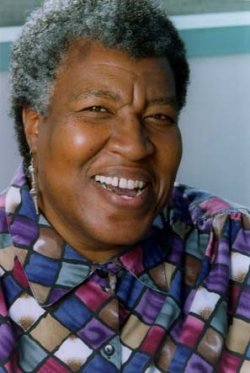
Sci Fi great Octavia Butler passes

InfoClearinghouse: American government heading for collapse?

American Government: Heading Toward Disintegration and Collapse

By Charles Mercieca, Ph.D.

02/26/06 "ICH" -- -- In several of his writings and interviews, former U. S. President Jimmy Carter stated that he is very much concerned at the direction the United States is moving. He said emphatically that this is not the United States he always knew. Many are increasingly beginning to convince themselves that the present United States government could be viewed as the worst in the history of the American nation. Democracy has ceased to exist for all practical purposes and we have a situation today where the right hand does not know what the left hand is doing.

Government Deterioration

Several scholars and organizations are becoming increasingly worried as they see their government deteriorating from day to day. They feel upset as they watch the American government openly spying on the public, especially on those with peaceful reputation. Besides, they are taken by surprise to see the great curtailing of free speech and the increasing of censorship of the news media covering the radio, press and television. Peaceful dissenters are being punished and at times put in jail, even if they were religious women and clergymen.

Moreover, to turn insult into injury, the press at times is secretly paid to write articles that would justify governmental actions even if they constitute blatant violations of human rights, as it has been found even with the foreign press reporters. The waging of an ongoing war in both Iraq and Afghanistan has now drained the financial assets of the U.S. government to the very detriment of the American people. As a result, millions of Americans suffer from lack of health care benefits, while their health deteriorates even to the point of death.

The destruction of the infrastructure of Iraq along with the massacre of tens of thousands of innocent civilian Iraqis, amounting to women, children, the elderly and the sick, along with pregnant women as well, has been minimized. The lies told to the American people on how the Iraqis have been “liberated” from the tyranny of Saddam Hussein, need to be challenged. A national referendum in Iraq needs to be conducted and all Iraqis from age of 15 to 95 must be allowed to participate under proper international supervision.

This referendum should consist of one question: Do you feel you were better off under Saddam Hussein when you still had your own homes, enjoyed the presence of your parents, spouses and children as well as friends? ……... Or, do you feel you are better off now under American domination with your homes destroyed, your parents, spouses and/or children killed or maimed, as well as with several of your friends killed or maimed for life? The whole world would be interested to hear directly what the Iraqis themselves have to say without any interference or manipulation from the outside.

Belligerent and Dangerous Policies

Very often the same questions are raised over and over again: When is the United States going to learn that in a war every one is a loser and no one a winner? Was not the Vietnam War experience enough? Is American diplomacy going to be always one based on guns, bullets, military involvements and wars instead of healthy dialogues and respect for others? It is very obvious that the United States would not hesitate to wage a war against Iran unless it brings this Asian nation under American political control. Why should the USA demand Iran not to have one nuclear weapon when this American nation has already more than 70,000 nuclear weapons and it is still manufacturing more?

In accordance with the philosophy of this American government, the United States can launch a pre-emptive strike against any nation on earth even without warning. Would it not then be natural for every country to equip itself with the most devastating weapons possible as way of counteraction against the United States? Moreover, since the United States manufactures and sells more weapons than all the nations of the world combined, it means that this American nation pollutes our air and water very badly with toxic wastes that is causing two millions of people incur cancer every year in the USA alone. Why is it that when the whole world wanted to take drastic action to curb air and water pollution from our planet, the USA was virtually the only dissenter?

It is very obvious that this capitalistic nation is concerned merely with the financial interests of big corporations and nothing else matters, not even the very health and life of the American people. Its top priority is to cater to special interests. This explains why the present U.S. government especially continues to cut significantly the budget on health care and education as to spend more and more money on corporate interests, generally headed by the weapons industry, the construction companies and the oil enterprises. In fact, every year the budget for the military and the waging of wars keeps on going higher and higher, while the budget on the vital needs of the people keeps on going lower and lower.

All of this explains why the American people in general and of the whole world at large tend to feel overwhelmed and powerless. But there is always hope. We learn from history that when good and evil struggle against each other, initially evil tends to take the upper hand until all of a sudden it disintegrates and collapses. Regardless of the vicious governments nations might have had, people always ended up getting what they viewed as positive and constructive. Like U.S. President Eisenhower said in his farewell address to the U.S. Congress, “all people of all countries want peace, only their government wants war.”

Looking for a Hopeful Future

We should look with hope into a positive and constructive future where people could live together peacefully, where education and health care will be available for every human being, and where the protection of the environment will become a top governmental priority. People everywhere need to unite in generating positive and constructive energy until peace, as well as harmony, respect and justice will become a tangible reality for everyone. We need to become more involved in public affairs. We must do our best to replace every single politician by a statesman. Some historians described a politician as one who takes interest in one group to the exclusion of others, while they described a statesman as one who takes interest in all people without exception.

The current belligerent American government will one day be replaced. The question is when. It may still take quite a time until the change is effected and by then only God knows how many people, both American and non American alike, would have suffered unnecessarily. The present turmoil in so many global areas is bound to continue as long as the USA and other major powers continue to use violence to solve some of the crucial problems the world faces. We know that violence begets violence and more violence begets more violence. The military, by its very nature, is structured merely for destructive purposes, even though once in a while it might have been used to help in some natural disasters for a very brief period.

At this stage of history, which has become characterized by so much violence, suffering and death, the United States needs a president that has the mind, the courage, the determination, the wisdom, the understanding, the compassion, and the common sense of both U.S. President Dwight Eisenhower and U.S. President Jimmy Carter, the sooner the better. The nation and the whole world, as a matter of fact, need a new direction where the vital needs of the people will occupy top priority in every governmental endeavor.

Charles Mercieca, Ph.D., President International Association of Educators for World Peace. Dedicated to United Nations Goals of Peace Education, Environmental Protection, Human Rights & Disarmament. Professor Emeritus, Alabama A&M University.

Friday, January 27, 2006

Video: Confessions of an Economic Hitman


Information Clearinghouse and Blackcommentator.com are the most vital sites on the Internet...

go there and tell me they ain't!

Minneapolis Plantation, lapdog media, drives School Supt. Dr. Thandiwe Peebles out

By anyone's account, Dr. Peebles would have statues built in her honor for what she has done to the hopelessly b esieged Mpls Public schools, lorded over by an elitist school board body consisting mostly of reps from the city's well to do southwest side.

The traditional guardians of the white mecca that is the Twin Cities have, in the last 18 months, closed more than 20 inner city schools, booted out the one person who seemed truly devoted to eliminating educational disparities between students of various ethnicities, and raised the achievement levels and test scores for students city wide.

Blacklogic wishes Dr. Peebles the best in all and whatever her future endeavors may be. Shame on the Mpls Public School Board.

raz.

Saturday, January 21, 2006

Blacklogic needs help!

BLACKLOGIC is desperate for wireless advice. Though I was paid through mid January Time Warner heisted my modem and now we're left with a wireless adapter with minimal knowledge of how to connect.

If you think Blacklogic has value, or can lend us some technical assistance, please email rashard.zanders@gmail.com or write snail mail to

Blacklogic
PO Box 300135
Minneapolis, MN 55405-0135

Monday, January 09, 2006

CNN.com - Protesters, workers clash in 9th Ward - Jan 5, 2006

CNN.com - Protesters, workers clash in 9th Ward - Jan 5, 2006

'We Who Are Dark,' by Tommie Shelby and 'Creating Black Americans,' by Nell Irvin Painter - The New York Times Book Review - New York Times

'We Who Are Dark,' by Tommie Shelby and 'Creating Black Americans,' by Nell Irvin Painter - The New York Times Book Review - New York Times

The Raw Story | Leaked memo indicates Democrats will focus on Abramoff as keystone of 2006 efforts to retake Congress


The Raw Story | Bush trying to round up all photos of President with Abramoff

The Raw Story | Bush trying to round up all photos of President with Abramoff

Feingold won't rule out Bush impeachment

Feingold won't rule out Bush impeachment


And neither shoud you!

Call your c0ngressional reps today!

AOL News - Belafonte Calls Bush 'Terrorist'


AOL News - Belafonte Calls Bush 'Terrorist'

Keep swingin' Harry!

AOL News - Barack Obama Shares Views on Iraq


Activists demand CBC release Katrina aide

blackenterprise.com

Shooting trial in small Minn. town will focus on race


I knew I should have gone wireless...

The 'good' folks at Time Warner (ROad Runner), I assume they're folks but I couldn't get an actual person on the phone, seem to have negated my service, though it is paid up through the 17th.

BLACKLOGIC has been unable to update for the last five days. Moral: go wireless -- screw Qwest and TW.

Sunday, January 01, 2006

SUPPORT BLACKLOGIC TODAY!

Blacklogic
PO Box 300135
Minneapolis, MN 55405-0135
612-578-8264